North America’s mineral supply chain just got less predictable. On July 1, 2026, the United States declined to renew the USMCA — known as T-MEC in Mexico and CUSMA in Canada — in its current form, choosing instead to keep the agreement in force while moving it into a period of annual review and continuing negotiation. No new mining tariffs took effect that day. But for anyone planning a long-lived mining or mineral-processing project, a stable decade-long trade framework has effectively been replaced by year-to-year uncertainty — and that has real consequences for how FRP tanks, process vessels and corrosion-resistant equipment get specified, sourced and documented.
What actually changed on July 1, 2026
The agreement did not lapse. Instead of a straightforward renewal, the pact stays in effect but enters an annual-review, continuous-negotiation status; if the three countries cannot reach consensus to extend it, the current framework drifts toward a 2036 expiry. U.S. officials cited unresolved trade deficits with Canada and Mexico, along with goals around market access, energy, reshoring and stricter rules of origin. Analysts quoted in the trade press cautioned that an annual-review posture can weaken investment confidence and slow near-shoring and cross-border capital commitments.
The politics of the negotiation are beyond the scope of this article. Our focus is narrower and practical: what a shift from a fixed framework to rolling uncertainty means for the companies that buy, build and operate mining and mineral-processing equipment.
Why trade uncertainty lands hardest on mining
Mining is not ordinary trade. A copper, lithium, silver or rare-earth project can take many years to move from exploration and permitting through construction to production. When the trade rules governing cross-border equipment, materials and finished metals could be reopened every year, lenders, funds and boards apply a higher risk discount. Capital gets more cautious, expansion decisions slow, and procurement is more likely to be phased. In a long-cycle business, uncertainty is itself a cost — and it tends to show up first in the pace of new equipment orders.
The real chokepoint isn’t ore — it’s processing
What North America lacks most is not ore in the ground but processing and refining capacity. The value chain runs ore → concentrate → chemicals and metals → battery, defense and grid components — and the hardest links to rebuild are the chemical-processing steps in the middle. That is precisely where corrosion-resistant composite equipment does its work.
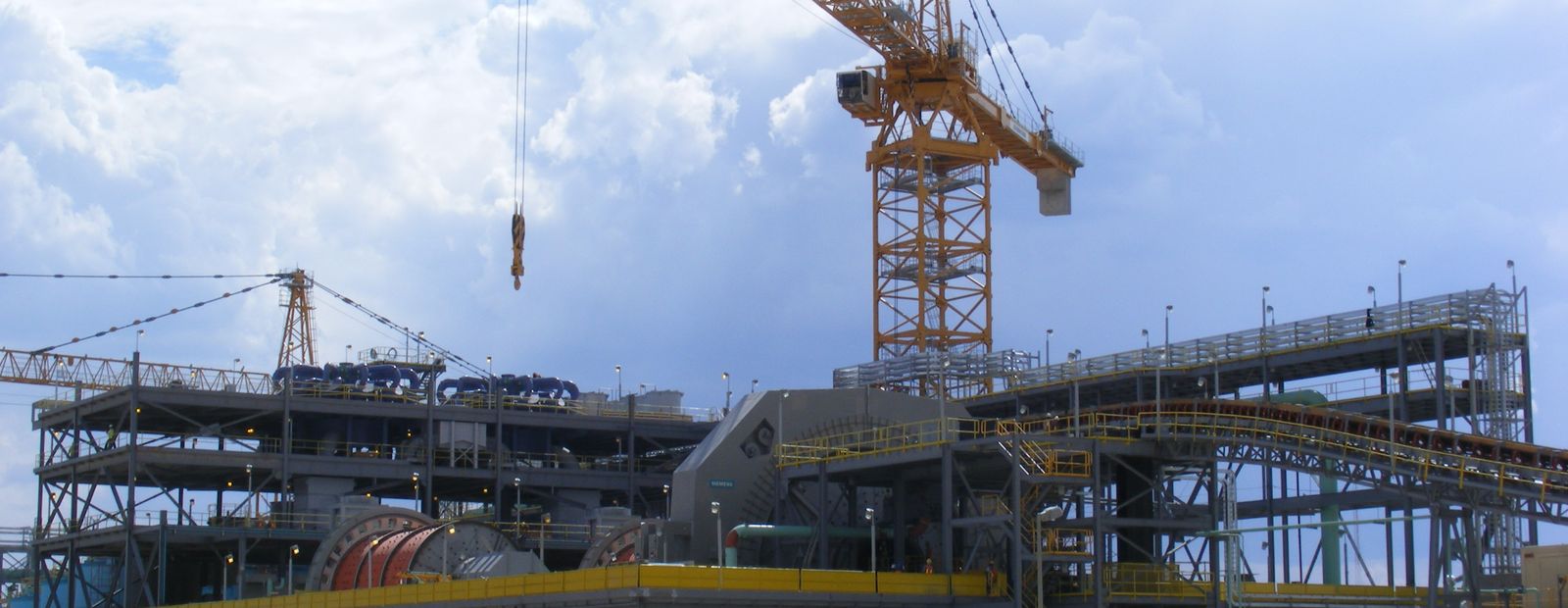
Hydrometallurgical and refining circuits run on aggressive chemistry: sulfuric acid, chlorides, hot acidic slurries and sour off-gas. In these services, FRP (fiberglass-reinforced plastic) tanks and process vessels, ductwork, stacks and fume scrubbers are the workhorses — leach and storage tanks, SX-EW mixer-settlers and electrowinning cells, acid and reagent tanks, process-water and tailings tanks, and the scrubbers and off-gas duct that keep emissions in check. Properly engineered FRP outlasts coated or bare steel by decades in this environment, which is why it is a default across mining and mineral processing, smelting and refining, and chemical processing.
Rules of origin may reach industrial goods — plan the paperwork
USMCA’s most contested rules of origin have historically centered on automobiles. In this round, U.S. officials signaled interest in extending stricter origin requirements to other industrial goods. If mining equipment, fabricated FRP and metal components, pumps, valves, ductwork and battery materials come under tighter origin scrutiny, buyers will increasingly ask not only “what’s the price?” but “what’s the country of origin, and is it USMCA-eligible?” Expect requests for documented North-American manufacturing content to spread from the auto sector into industrial and mining equipment.
This article is general information, not legal or trade-compliance advice. Tariff classification and origin determinations should be confirmed with qualified trade counsel for your specific goods.
How North American-built FRP equipment de-risks a mining project
In a “safety-first, content-first” trade environment, the equipment most worth locking in early is the corrosion-resistant, hard-to-standardize process gear that keeps a plant running. That is Crimar Industrial’s core work.
Corrosion-resistant by design. Crimar engineers FRP tanks, vessels, ductwork and scrubbers for the exact chemistry they will see, so operators get longer service life, lower total cost of ownership and fewer unplanned shutdowns — a direct hedge against schedule and capital risk.
Custom hand lay-up for large, one-off equipment. Crimar fabricates tanks, ducts, scrubbers, stacks and process vessels up to 15 m in diameter — the large, made-to-order equipment that cannot be pulled off a shelf or imported quickly when timelines tighten.
A North American manufacturing footprint. Crimar fabricates in the United States (Tucson, Arizona) and Mexico (Hermosillo, Sonora), giving buyers a genuine nearshore, North-American manufacturing option as origin requirements tighten — backed by global capacity when a project needs scale.
Documentation built for scrutiny. Material traceability, mill certificates, country-of-origin records and full quality-and-inspection dossiers (ITPs, dimensional reports, NDE and factory acceptance testing) are exactly the paperwork buyers will increasingly need — the same disciplined approach shown in our recent FRP-lined damper project and across our project record.
A practical checklist for mining equipment buyers
- Ask suppliers for country-of-origin and USMCA-eligibility documentation up front — before, not after, the purchase order.
- Standardize on corrosion-resistant FRP for acid, slurry and off-gas service to cut lifecycle cost and shrink unplanned shutdown risk.
- Plan for longer lead times and consider phased procurement on multi-year builds.
- Ask for extended quote validity and clear terms as trade rules move year to year.
- Favor suppliers with North American fabrication and complete material traceability.
The bottom line
The center of gravity in North American trade is shifting from “buy where it’s cheapest” toward “buy where it’s secure, compliant and politically durable.” That makes supply chains somewhat slower and more expensive — but it raises the strategic value of North-American corrosion-resistant processing equipment and the suppliers who can document it. For mining and critical-minerals operators, standardizing on well-engineered, traceable FRP tanks and process equipment is a straightforward way to take one large variable off the table.
Frequently asked questions
What FRP equipment is used in mining and mineral processing?
Common items include FRP leach and storage tanks, SX-EW mixer-settlers and electrowinning cells, acid and reagent tanks, process-water and tailings tanks, fume scrubbers, stacks and corrosion-resistant ductwork — anywhere acidic or chloride-bearing solutions and gases would attack steel.
Why choose FRP over steel for acid and slurry service?
A bonded FRP corrosion barrier is engineered for the specific chemistry and does not rely on a sacrificial coating that fails at the first scratch or weld. In sulfuric-acid, chloride and slurry service, well-designed FRP tanks and vessels routinely outlast coated or bare steel by decades, lowering total cost of ownership.
Can Crimar provide country-of-origin documentation?
Yes. Crimar supplies material traceability, mill certificates and country-of-origin records alongside full QC dossiers, and fabricates in the United States and Mexico for buyers who need a North-American manufacturing option.
Building or de-risking a mining project?
Talk to Crimar about corrosion-resistant FRP tanks, vessels and process equipment — engineered for your chemistry and documented for North American supply.
Background reporting on the USMCA developments: The Guardian, Barron’s and the New York Post.