
FRP Covers & Gratings
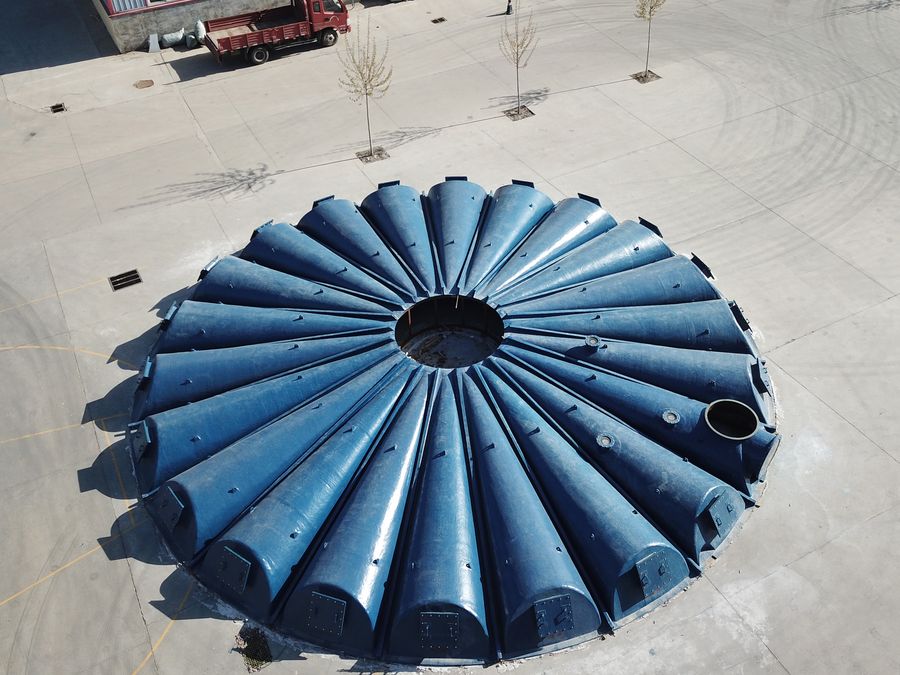
FRP thickener and clarifier covers seal aggressive process tanks, control odor and emissions, and extend equipment life. Crimar engineers clear-span domed and flat covers with FRP trusses, plus launder covers, tank covers, gratings and handrail for safe access.
FRP cover, internals and grating specifications
| Product | Range and options |
|---|---|
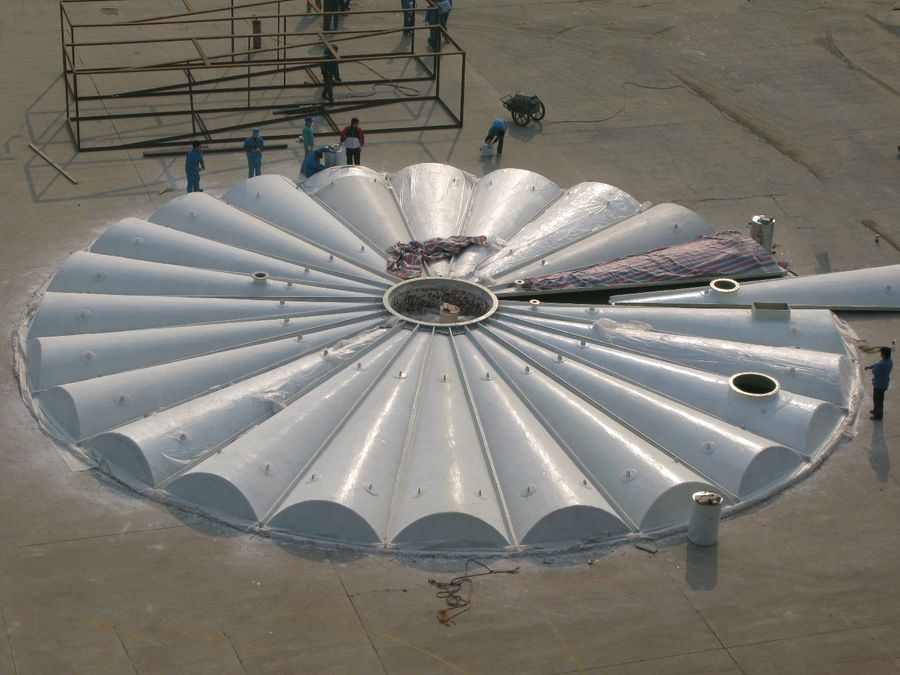
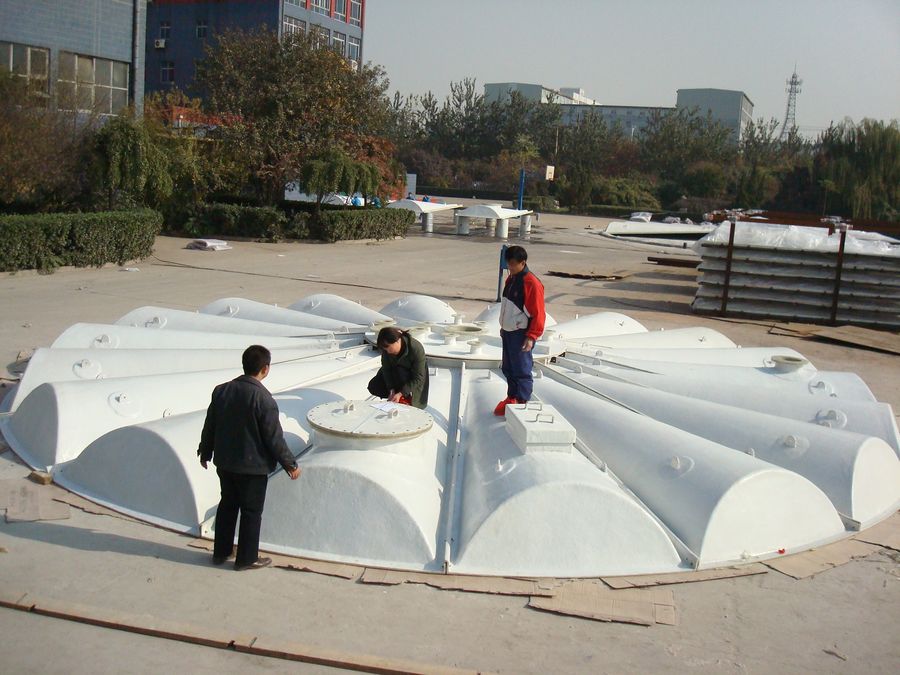
| Thickener and clarifier covers | Domed and flat clear-span covers on FRP trusses; delivered from 12 m to 45 m in diameter; insulated sandwich-core panels for heat retention and stiffness. |
| Hot-vapor covers | Covers for hot brine, hot acid vapor and acid/kerosene (SX) vapor, with resin chosen for the vapor chemistry and temperature. |
| Cooling and humidifying tower covers | Covers for hot-acid cooling towers and humidifying towers in smelter acid plants. |
| Launders, troughs and weirs | Peripheral launder and trough systems supplied in segments for field bonding, with depth varied for continuous drainage to the discharge box. |
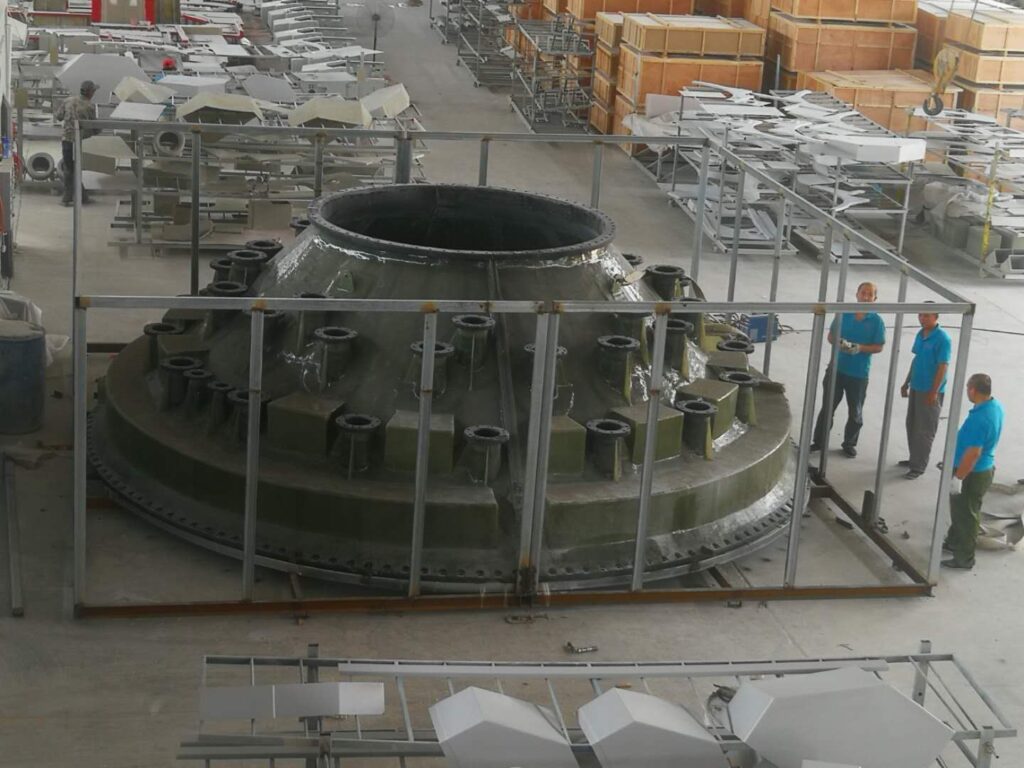
| Feedwells and draft tubes | Shop-built FRP feedwells, draft tubes, sample sinks and drop-out boxes. |
| Tank and basin liners | Shop-made 6 mm FRP wall and floor segments bonded on site inside concrete or steel tanks; field-applied FRP linings on steel. |
| Access | Access hatches, inspection ports, vents and sample ports; bolted, gasketed panels for field assembly. |
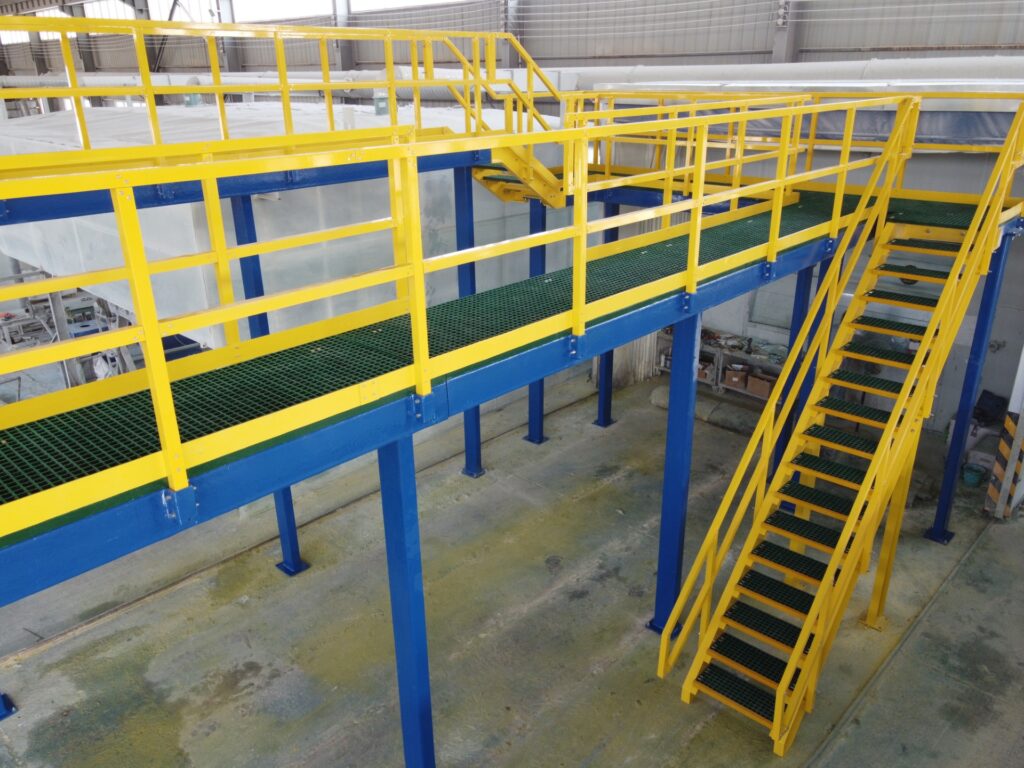
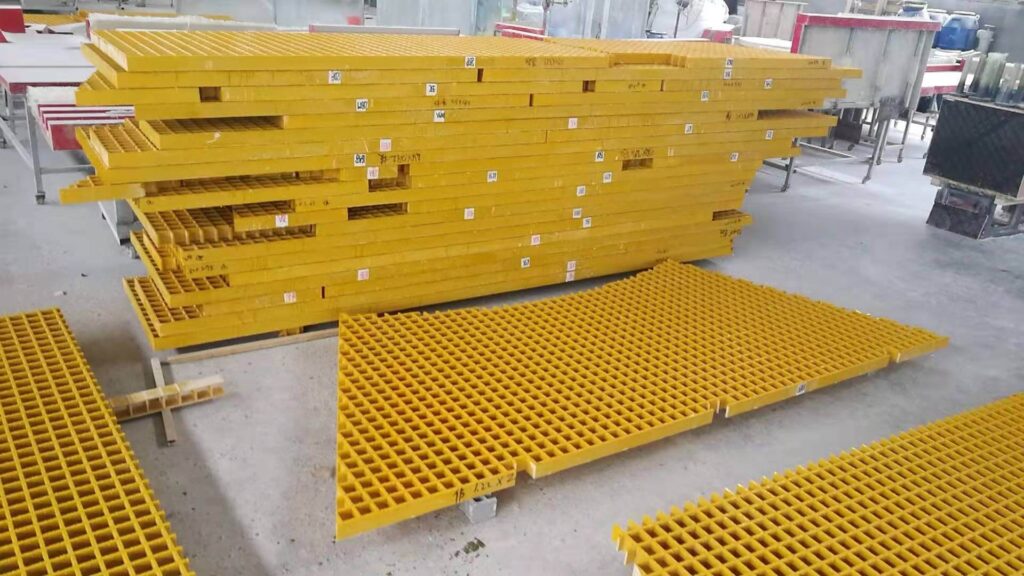
| Molded FRP grating | One-piece molded panels with a concave non-slip surface (grit top on request), load-bearing bars in both directions, choice of five resin systems, all with UV inhibitor. |
| Design inputs | Wind load, snow load, operating temperature, chemical environment, abrasion and vessel dimensions. |
Covers we have built
| Cover | Diameter | Service |
|---|---|---|
| Potash plant cover | 45 m | Hot brine |
| Thickener covers | 30 m | Mineral processing |
| Clarifier cover | 60 ft (18.3 m) | Clarifier |
| Process covers, Madagascar | 18.4 m | Hot acid vapor |
| Thickener covers, Quebec | 16 m | Mineral processing |
| Floating roof | 12 m | Deionized water |
| Rectangular covers | To project size | Acid and kerosene vapor (SX) |
Glencore’s PASAR copper smelter uses our FRP covers on its hot-acid cooling tower and humidifying tower. For WesTech we have built launder systems for two 73.2 m diameter thickeners in Puerto Rico, eight FRP feedwells, troughs and draft tubes for Australia, an FRP thickener roof for Mexico, and drip trays, covers and a feed tank system in the USA.
How we design a large FRP cover
A clear-span cover is a structure first. Panels, trusses and the center section are designed for wind and snow loads, the dead load of walkways and equipment, and the temperature and chemistry of the vapor under it. Insulated sandwich-core panels do two jobs: the insulation controls heat loss from hot liquor, and the core makes the panel a stiffer sandwich structure.
Details decide how a cover performs in service. Outdoor covers in salty or dusty environments need panel tops that drain freely, with no pocket shapes where rainwater and salt collect, and as few fasteners as practical. Owners often prefer connections and fixings on the outside of the tank, where they can be maintained, and a center section near the drive and shaft that can be removed panel by panel for maintenance access. Panels are shop-made, gasketed and bolted, and shipped in sizes that fit the transport envelope.
Liners for existing concrete and steel tanks
Where a concrete or steel basin is sound but corroding, we line it instead of replacing it. Shop-made 6 mm FRP wall and floor segments, sized to the shipping envelope, are bonded in place with FRP corner sections and field-bonded joints. On steel, the surface is blasted to white metal and primed with a urethane-modified vinyl ester (Derakane 8084); six layers of glass mat are applied to about 0.25 in., followed by a Nexus or C-glass surfacing veil and a final resin-and-wax surface coat for full cure.
Molded FRP grating
Molded grating is cast in one piece with load-bearing bars in both directions, so panels can be cut on site with little waste and used without continuous side support. Its high resin content gives corrosion resistance in wet, acidic areas; the panels are light, low in electrical conductivity and available fire retardant. Extra glass at the bottom of the panel adds tensile strength. We also supply FRP stair treads, handrail and FRP cable trays.
Resins and datasheets
Materials & resins
We select the corrosion barrier and structural laminate for each service — Derakane™ epoxy vinyl ester and AROPOL™ isophthalic polyester systems — matched to the chemistry, temperature and abrasion of your process. Common choices and datasheets:
Derakane 411 — general corrosion · Derakane 470HT — high temperature · Derakane 510B — fire retardant (ASTM E84 flame spread 25) · Derakane 8084 — abrasion / elastomer-modified · AROPOL 7334T — isophthalic
FRP covers, internals and grating: frequently asked questions
How large can an FRP thickener or clarifier cover be?
We have built covers up to 45 m in diameter, for a hot-brine potash application. Large covers are clear-span domes or flat covers on FRP trusses, shipped as bolted panels and assembled on site.
Why FRP instead of a steel or aluminum cover?
Because the underside of a cover lives in the vapor of the tank: hot brine, acid mist, hydrogen sulfide or solvent vapor that corrodes steel and attacks aluminum. An FRP cover has the corrosion barrier on the vapor side, is light enough for long clear spans, and needs no coating maintenance.
Can a cover be insulated?
Yes, with sandwich-core panels. The insulation controls heat loss and condensation over hot liquor, and the core makes each panel a stiffer structure.
Can you line an existing concrete or steel tank instead of replacing it?
Yes, when the structure is sound. Concrete and steel tanks are lined with bonded 6 mm FRP segments; steel can also be blasted to white metal and laminated in place with an 8084 primer, six layers of mat to about 0.25 in. and a surfacing veil.
What is the difference between molded and pultruded FRP grating?
Molded grating is cast in one piece with bars in both directions, so it is bidirectionally load-bearing, easy to cut and very corrosion resistant because of its high resin content. Pultruded grating has continuous load bars in one direction. Both are available; the choice depends on span, load and chemistry.
What do you need to quote a cover?
The tank diameter, wall height and rim details; the liquor and vapor chemistry and temperature; wind and snow loads; walkways, equipment and drive loads on the cover; access hatch, vent and sample-port locations; and whether insulation is required.
Request a quote for FRP Covers & Gratings
Send your drawings or service conditions and our engineers will spec it with you.