
Case study · Mineral processing · FRP lamella packs
FRP Lamella Plate Packs for High-Rate Clarifiers & Thickeners
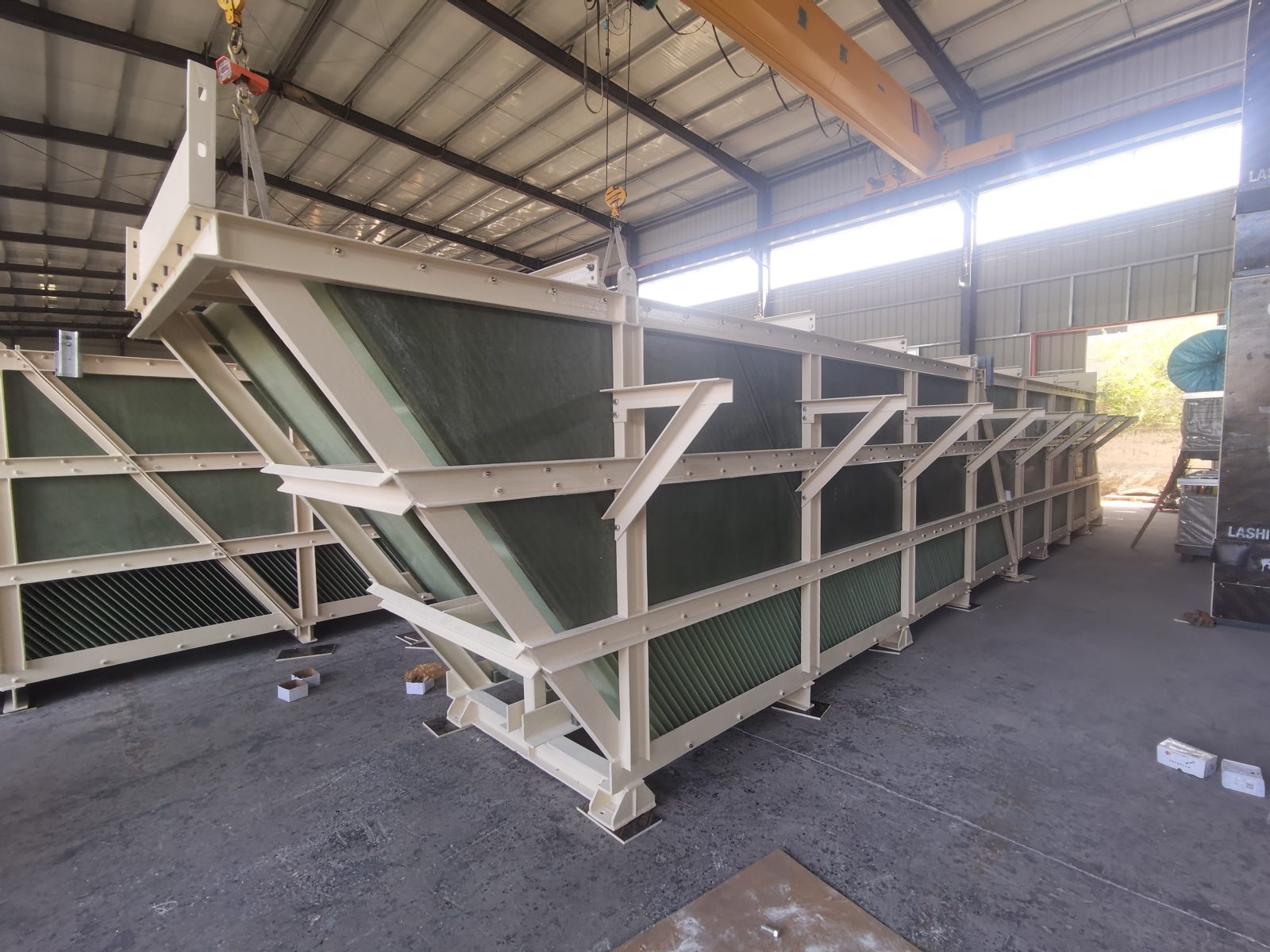
Modular FRP lamella (inclined-plate) packs for an 18 m and a 26 m thickener at a new potash mine in Canada, supplied to FLSmidth with a Manufacturing Data Record for every pack. The first order in July 2023 was followed by a second-stage order in December 2024.
The project at a glance
| Case summary | This project |
|---|---|
| Industry | Potash mining and mineral processing: solid–liquid separation |
| Customer | FLSmidth, for thickeners at a new potash mine in Canada |
| Problem | Add inclined-plate settling area inside an 18 m and a 26 m thickener, in brine service where steel plates corrode, with modules that ship and install as units |
| Solution | FRP lamella plate packs built to FLSmidth’s drawings, in modules sized for transport, each with its own inspection record and FLSmidth equipment tags |
| Result | Stage-one packs for both thickeners (PO July 2023), each 18 m pack with a full MDR; FLSmidth then ordered the stage-two plate systems in December 2024: 4 for the 18 m and 6 for the 26 m thickener |
The problem: more settling area in brine service
A thickener’s capacity depends on the area available for solids to settle. Lamella packs stack many inclined plates in the feed zone, so particles only have to fall a short distance before sliding down to the underflow. The effective settling area becomes several times the plan area of the plates, which lets a thickener of a given diameter handle more flow or produce clearer overflow.
Potash plants handle saturated chloride brines. Steel plates and frames corrode in that service, and coated steel needs repairs that mean taking the thickener down. The plates themselves must be smooth, flat and evenly spaced so that solids slide off rather than build up.
- Chloride brine service
- Two thickener sizes on one project: 18 m and 26 m diameter
- Modules large enough to install quickly but small enough to ship
- Every pack tagged and documented to FLSmidth’s capital-project procedures
The solution: modular FRP packs built to the OEM’s drawings
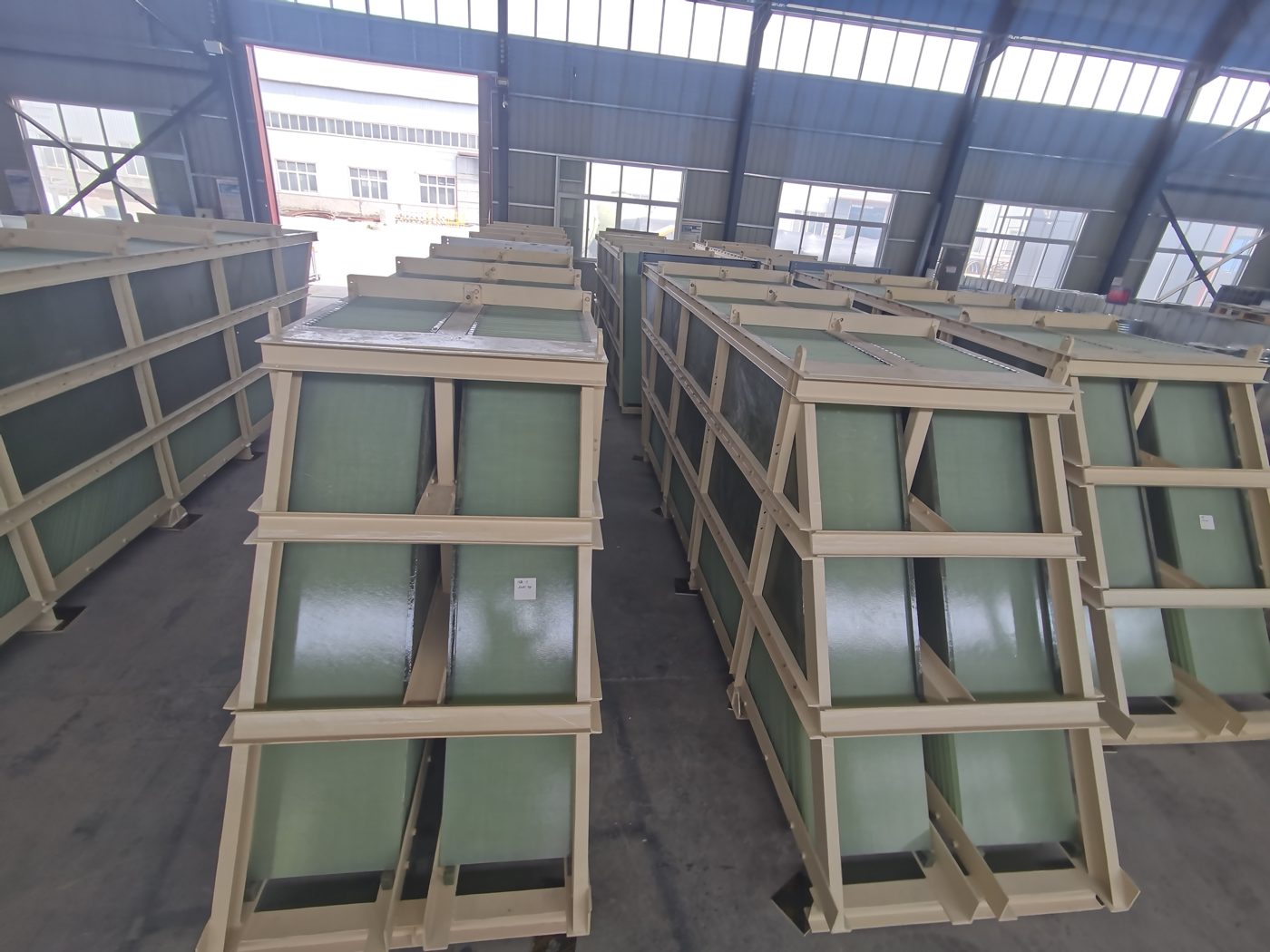
Crimar built the lamella assemblies to FLSmidth’s assembly drawings and parts lists for each thickener. The plates are FRP laminate with gel-coated surfaces, assembled into packs in support frames. Plate angle and spacing follow FLSmidth’s process design.
| Item | Data |
|---|---|
| Thickeners | 18 m and 26 m diameter |
| Stage-one order | July 2023: lamella assemblies for the 18 m thickener (4 inner and 4 outer sections) and for the 26 m thickener |
| Stage-two order | December 2024: plate systems for the 18 m thickener (4) and the 26 m thickener (6), with an inspection and test plan |
| Module size (shipping) | Up to 7.36 m × 1.52 m × 2.34 m |
| Module weight | About 4.0 to 5.8 t each |
| Construction | FRP laminate plates with gel-coated surfaces, in support frames |
| Inspection | Material certificates, Barcol hardness, dimensional inspection |
| Documentation | Manufacturing Data Record (MDR) for each pack; FLSmidth equipment tags and packing lists |
| Shipping | Export packed, FCA factory |
How lamella packs add settling area
The settling area a lamella pack adds is the projected area of its plates: the number of plates, times the area of each plate, times the cosine of the plate angle. Plates are steep enough for settled solids to slide off, usually around 55 to 60 degrees from horizontal, and spaced closely enough that particles only fall a short distance. The process designer sets the angle, spacing and pack size from the solids’ settling rate and the flow; the fabricator’s job is to hold those dimensions plate after plate and pack after pack.
That is why flatness, spacing and surface finish matter as much as corrosion resistance. Warped or unevenly spaced plates change the flow between channels, and a rough surface holds solids. Gel-coated FRP plates stay smooth, and FRP does not lose section to corrosion over time the way steel does.
| Plate material | Brine and chloride service | Weight | Surface |
|---|---|---|---|
| FRP (vinyl ester or polyester laminate) | Does not corrode | Light: packs handled as modules | Smooth gel coat |
| Coated carbon steel | Corrodes where the coating is damaged | Heavy | Coating wears and needs repair |
| Stainless steel | Risk of chloride pitting and crevice corrosion | Heavy | Smooth, but costly in large areas |
Schedule, inspection and shipping
Fabrication was reported weekly to FLSmidth with progress reports from August to October 2023. Each completed pack received its own MDR with the material certificates, hardness readings and dimensional check, and was tagged to FLSmidth’s equipment-tagging procedure before export packing.
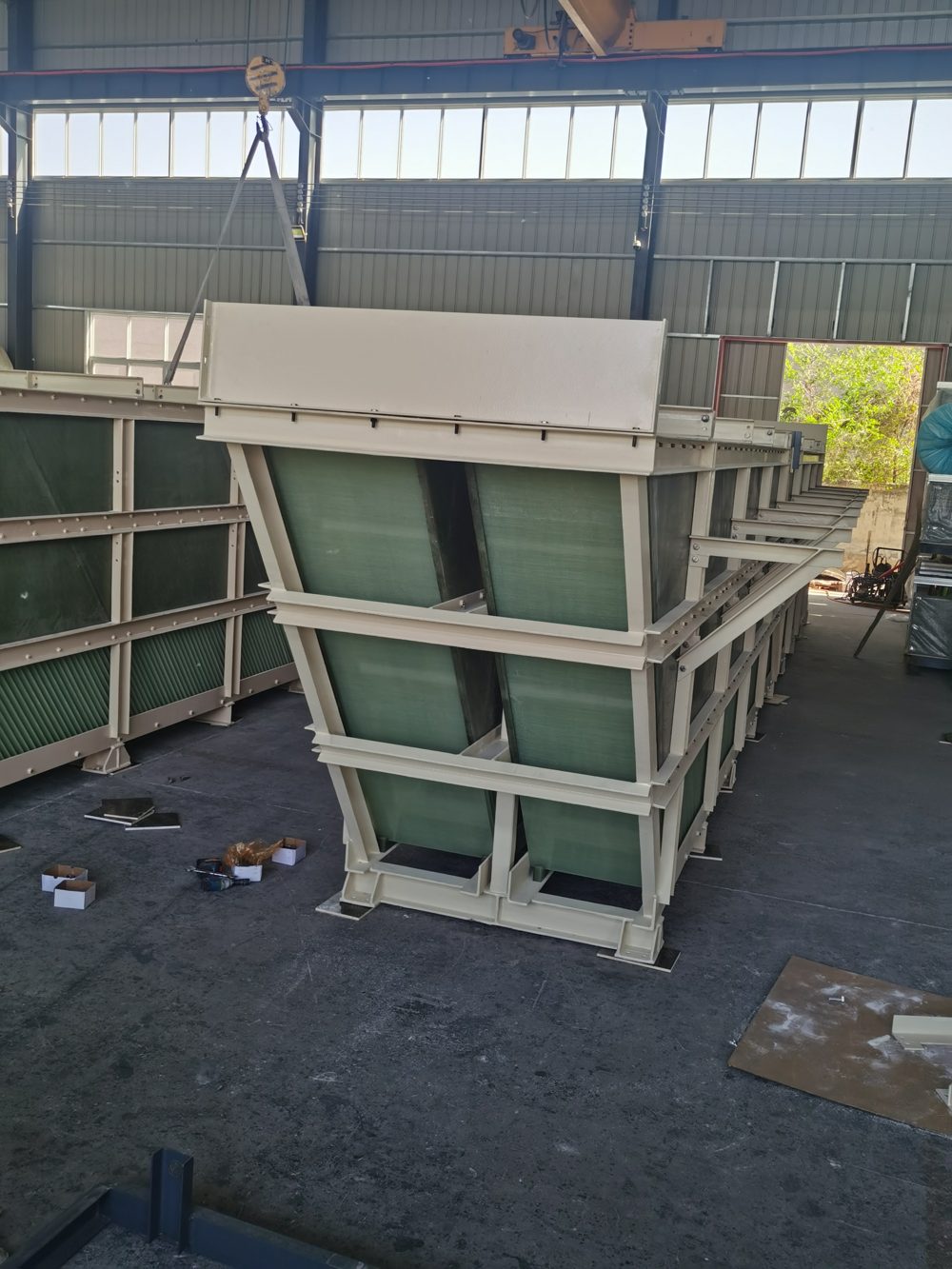
Packs shipped as complete modules up to 7.36 m long. Shipping the packs assembled means the thickener contractor sets each module into the support structure instead of building plates in place.
What this project shows
- FRP lamella packs can be built to the thickener OEM’s own drawings and tagging procedures.
- Modular packs of 4 to 6 t ship as units and install without building plates in place.
- A pack-by-pack MDR gives the OEM and owner a clear quality record.
- The first stage led directly to a repeat order for the second stage.
Related pages: solid–liquid separation equipment, FRP for mining and mineral processing and water and wastewater.
Frequently asked questions
Why use FRP for lamella plates?
Because FRP does not corrode in brine, acid or chloride water, it is light enough to handle as modules, and its smooth gel-coated surface helps solids slide off the plates.
Can you build lamella packs to an OEM’s drawings?
Yes. This project was built to FLSmidth’s assembly drawings, parts lists, tagging procedure and inspection and test plan.
How big can a lamella module be?
Modules on this project were up to 7.36 m × 1.52 m × 2.34 m and about 4 to 5.8 t, sized for road and sea transport.
What quality records are supplied?
A Manufacturing Data Record for each pack, with material certificates, Barcol hardness and dimensional inspection, plus the OEM’s tags and packing lists.
Can lamella packs be added to an existing thickener or clarifier?
Often, yes. Packs are designed to fit the existing tank and feed arrangement; send the tank drawing and process data for a review.
What do you need to quote lamella packs?
The OEM or process drawings, plate angle and spacing, pack dimensions and quantity, the liquid chemistry and temperature, and inspection and tagging requirements.
Planning lamella packs?
Send the drawings and process data and we will quote FRP packs with full inspection records.