
Project Case Study · FRP Process Equipment
FRP-Lined Butterfly Dampers for Corrosive Flue-Gas Service
Large-diameter (DN1300–DN1800) FRP-lined carbon-steel isolation and control dampers, engineered for sulfur-bearing flue gas, acidic condensate and vacuum service — fabricated, tested and export-packed with a complete quality dossier.
Project overview
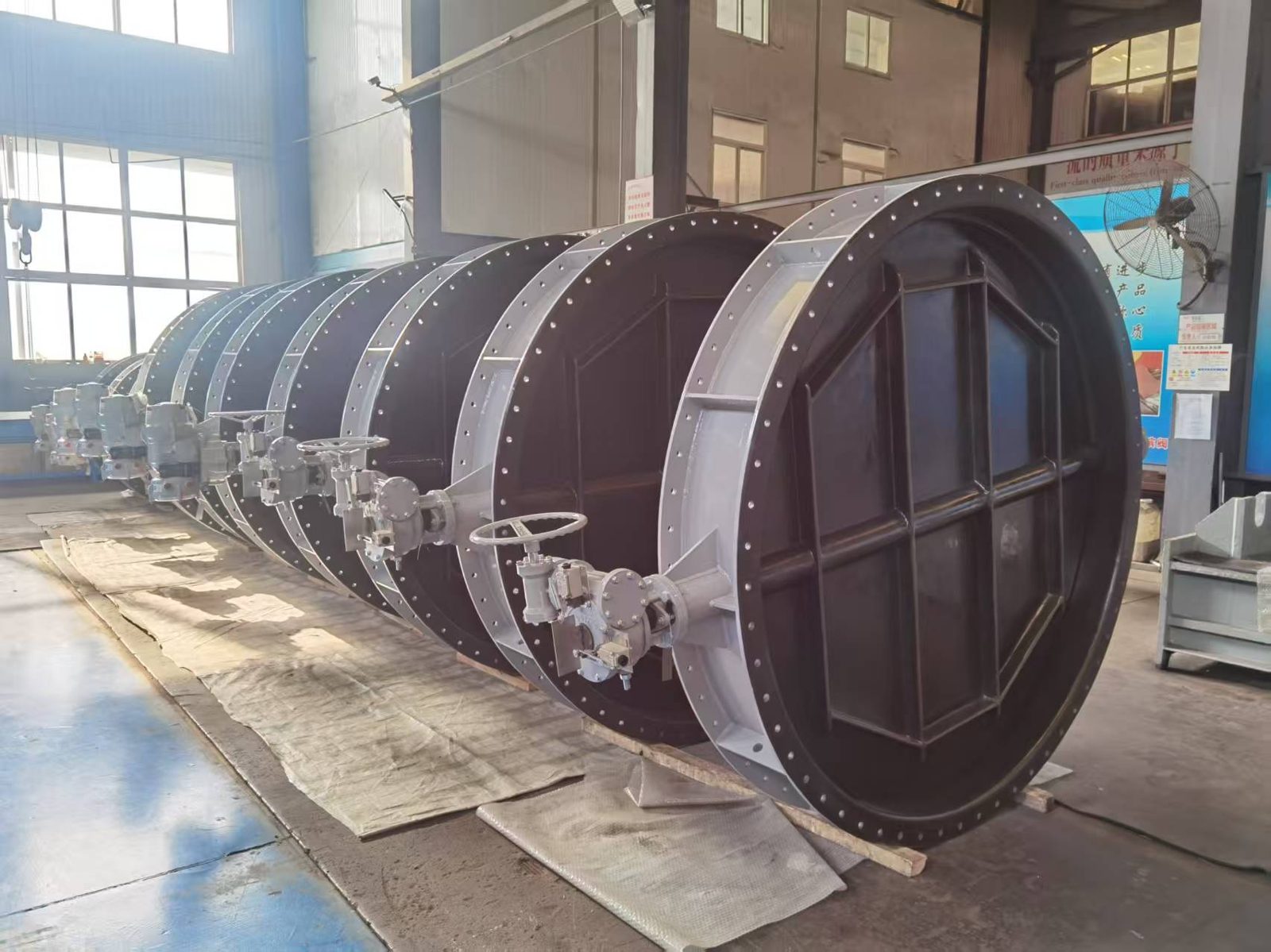
An industrial process operator needed a bank of large-diameter butterfly dampers to isolate and regulate corrosive off-gas within a metallurgical gas-handling system. The duty is one of the most punishing in industrial flow control: hot, sulfur-bearing gas under vacuum, with acidic condensate and solids that quickly destroy unprotected carbon steel. Crimar engineered the material system, fabricated the dampers, executed a full inspection and test program, and delivered the complete set export-crated and ready for installation.
The challenge: corrosion, temperature and vacuum in a single duty
Flue-gas and exhaust-gas isolation dampers have to survive several failure modes at once. Getting any one of them wrong shortens service life dramatically. For this project the governing conditions were:
- Sulfur dioxide (SO₂)-rich smoke and exhaust gas that forms aggressive acidic condensate
- Continuous negative-pressure (vacuum) service to roughly −3.4 kPa
- Operating temperature up to approximately 80 °C (176 °F)
- Entrained solids and heavy loading across the disc
- A tight shut-off requirement — leakage held to no more than 1%
Bare carbon steel would corrode rapidly in this environment, while a solid-fluoropolymer or exotic-alloy damper of this diameter would be prohibitively expensive and difficult to fabricate. The engineered answer is a structural steel body protected by a fiber-reinforced plastic (FRP) corrosion barrier — combining the mechanical strength and dimensional stability of steel with the chemical resistance of composites.
Engineering and material solution
A structural steel body with an FRP corrosion barrier
The body, disc/blade and retainer rings are fabricated from carbon steel (Q235B) sized for the full pressure, vacuum and wind/maintenance loads, then lined with an FRP corrosion barrier engineered for the specific gas chemistry. A vinyl-ester-based laminate with a resin-rich corrosion barrier and surfacing veil provides the primary defense against acidic condensate; the operating shaft is steel sheathed in FRP so that no bare metal is exposed to the gas stream. This lined-steel construction is the same philosophy Crimar applies across its chemical-service equipment, where composites routinely outlast coated or bare metal by decades.
Fluoropolymer sealing face for tight shut-off
Reliable isolation depends on the seat and shaft sealing system, not just the liner. The sealing faces incorporate a fluoropolymer (PFA) element backed by graphite gland packing at the shaft penetration, giving a corrosion-resistant, low-friction seal that holds the ≤1% leakage class. Sealing performance was confirmed on every unit by a documented seal/leakage test before shipment.
Manual and electric actuation
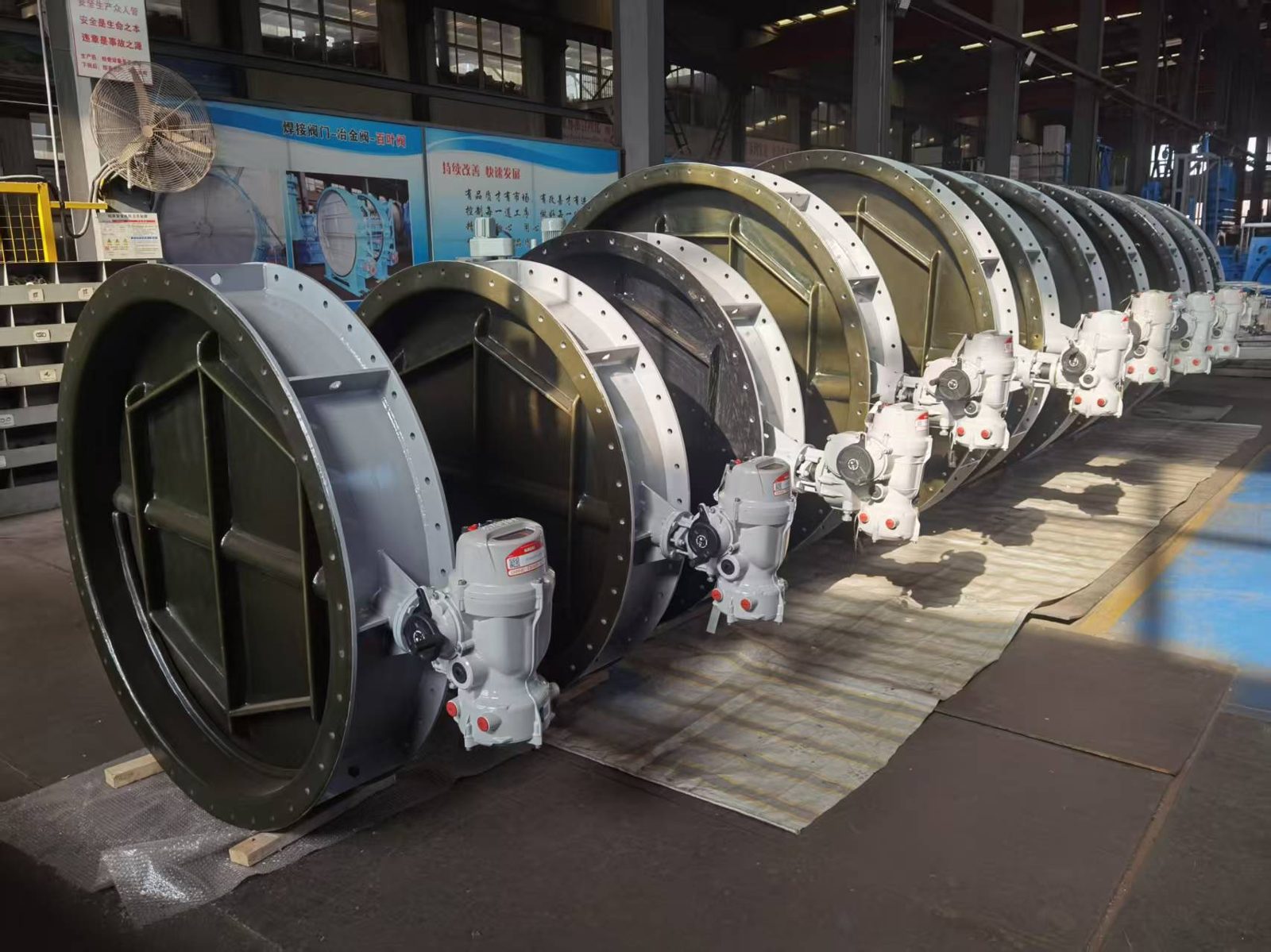
The dampers are configured for both manual and automated operation. Self-locking worm-gear operators with handwheels provide precise manual positioning and hold the disc against differential pressure, while electric quarter-turn actuators with position feedback allow remote isolation and modulating flow control from the plant control system. Steel ball-type bearings keep operating torque low and repeatable over the life of the equipment.
Technical specifications
- Equipment: Flanged butterfly isolation / control damper, FRP-lined
- Design standard: JB/T 8692 (butterfly damper)
- Size range: DN1300 – DN1800 (larger on request)
- Body & disc: Carbon steel Q235B, FRP-lined
- Shaft: Steel with FRP sheath
- Corrosion barrier: Vinyl-ester FRP laminate + veil
- Sealing: PFA fluoropolymer face + graphite gland packing
- Service pressure: Negative pressure to ≈ −3.4 kPa
- Operating temp.: Up to ≈ 80 °C (176 °F)
- Leakage class: ≤ 1%
- Operation: Worm-gear (manual) or electric actuator
- Media: Smoke, flue gas, exhaust gas
Specifications reflect the engineered design basis for this project; exact configuration, dimensions and materials are tailored to each application.
Project parameters at a glance
| Sector / service | Air-pollution control · flue-gas isolation |
| Equipment | FRP-lined butterfly isolation / control dampers |
| Size range | DN1300 – DN1800 (larger on request) |
| Process medium | Smoke / exhaust (flue) gas |
| Operating temperature | Up to 80 °C |
| Operating pressure | Negative, to -3.4 kPa |
| Materials | Carbon-steel Q235B body & disc, FRP-lined; steel shaft with FRP sheath |
| Design standard | JB/T 8692 (butterfly damper) |
| Inspection | Dimensional, lining & coating checks, operational test |
| Documentation | Material certificates, inspection records, MDR available |
| Delivery | Multiple units fabricated & shipped to schedule |
Customer identity, commercial terms and proprietary drawing details are withheld under confidentiality. Parameters shown are representative of the delivered scope.
Manufacturing and quality assurance
Corrosion-service dampers are only as good as the documentation that proves how they were built. Every unit in this project moved through a controlled inspection and test plan (ITP), with results compiled into a per-order quality dossier:
- Raw-material mill test certificates (MTC) for the carbon-steel components
- Dimensional inspection against the approved fabrication drawings
- Liquid-penetrant testing (PT) of structural welds
- FRP lining and PFA verification — thickness and continuity checks of the corrosion barrier
- Seal / leakage test to confirm the shut-off class on each damper
- Factory acceptance test (FAT) with functional open/close of the actuation
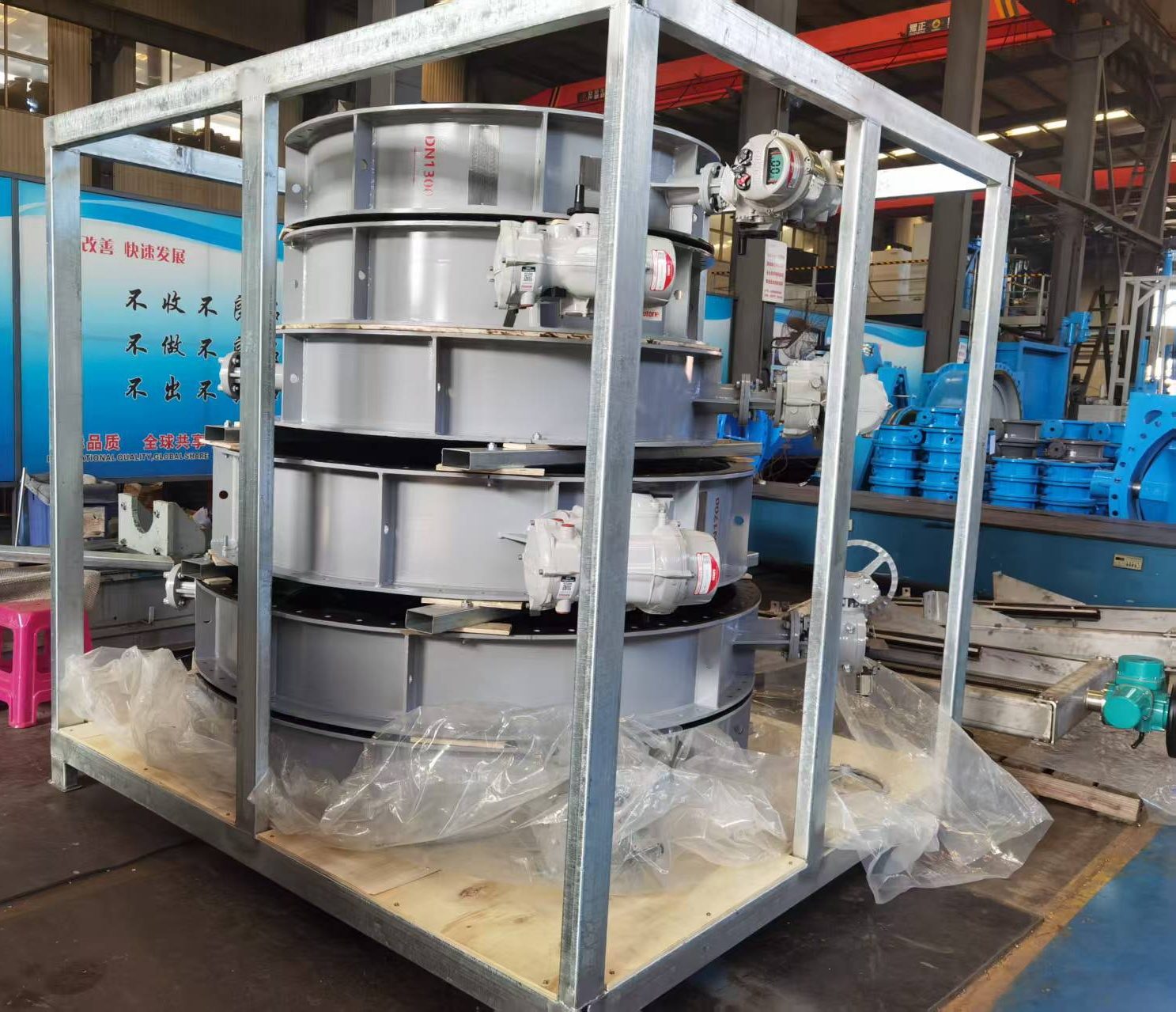
Third-party and witnessed inspection can be accommodated where the client or specification requires it, and each shipment is protected for ocean freight in purpose-built galvanized-steel frames. This disciplined approach to quality and inspection is applied across all of Crimar’s fabrication work.
Industries and applications
FRP-lined butterfly dampers of this type are specified wherever corrosive gas has to be isolated or throttled: non-ferrous smelting & refining, sulfuric acid plants, wet scrubbing and air-pollution-control systems, mining & mineral processing, and chemical processing. They pair naturally with related composite equipment such as FRP dampers & expansion joints, FRP ductwork & piping and FRP scrubbers & towers.
Why FRP-lined dampers outlast coated steel
A coating is a sacrificial film; once it is scratched or breached at a weld, corrosion propagates underneath and the steel is lost. A bonded FRP corrosion barrier is a structural layer engineered as part of the component, with a resin-rich barrier and veil selected for the exact chemistry it will see. Combined with a fluoropolymer sealing face, the result is a large-diameter damper that delivers reliable, tight shut-off for decades in service that would consume uncoated or merely painted steel in a season.
Frequently asked questions
What sizes of FRP-lined butterfly dampers can Crimar supply?
This project covered the DN1300–DN1800 range; larger diameters can be engineered on request. Face-to-face dimensions, flange drilling and disc design are matched to the ducting and code required by each application.
What corrosion barrier and temperature limits apply?
The standard corrosion barrier is a vinyl-ester FRP laminate with a fluoropolymer (PFA) sealing face, suitable here for SO₂-bearing gas up to roughly 80 °C. Higher temperatures or different chemistries call for an engineering review of resin, veil and barrier construction.
Can the dampers be automated?
Yes. Units ship with manual worm-gear operators or electric quarter-turn actuators with position feedback for remote isolation and modulating control; pneumatic actuation can also be specified.
What quality documentation is provided?
A per-order dossier including mill certificates, dimensional reports, PT weld results, FRP lining verification, seal/leakage test and a factory acceptance test. Third-party or witnessed inspection is available on request.
Need corrosion-resistant dampers for flue-gas service?
Send us your gas chemistry, temperature, pressure and size, and our engineers will recommend the right FRP-lined damper and material system for your process.