Mining companies are carrying more risk at once than they have in years: shifting trade rules and geopolitics, volatile energy costs, tighter environmental requirements and increasingly unpredictable water. El Niño is one of the clearest examples of how climate variability can reach directly into a mine’s water balance, and into the equipment that stores, moves and treats that water.
In its 8 October 2026 update, the NOAA Climate Prediction Center reported that El Niño continues to strengthen, with a strong-to-very strong event likely through January–March 2027. For operators, the practical question is not whether El Niño makes headlines. It is how the water entering, moving through and leaving a site could change over the coming months, and whether the infrastructure that handles it, including corrosion-resistant equipment made from fiberglass-reinforced plastic (FRP), is ready.
What El Niño can mean for mining operations
El Niño is a periodic warming of the central and eastern tropical Pacific that shifts rainfall and temperature patterns around the world. NOAA’s typical-impact maps associate it with wetter conditions in parts of western South America and drier conditions in regions such as southern Africa, Indonesia and parts of Australia. These are tendencies, not forecasts for any individual site.
El Niño does not affect every mining region in the same way. One region may experience excessive rainfall, while another may face drought or extreme heat. Mine-level risk assessment must therefore be based on location, process conditions, infrastructure and water balance.
Heavy rainfall and flooding
Where El Niño brings intense rain, open pits can fill with water and mining, stripping and haulage may stop. Roads, rail lines, ports and site infrastructure can be damaged, and saturated ground raises the risk of slope instability, landslides, debris flows and flash floods. Tailings facilities, collection ponds and drainage systems carry higher loads, while power, communications and supply chains may be interrupted. In July 2026, Peru declared a 60-day state of emergency in 796 districts because of El Niño-linked rainfall risk.
Drought and water scarcity
Elsewhere the risk runs the other way. Concentrators, ore washing, dust suppression and slurry transport all depend on reliable water. When reservoirs and other sources decline, plants may have to reduce throughput, pay more for external supply or recycle a larger share of their own water. Hydropower can also be affected: in 2024, an El Niño-related drought cut hydroelectric output in Zambia, and the national utility warned copper miners that power supply could fluctuate. Pressure on water shared with communities and agriculture tends to rise at the same time.
Water quality and environmental compliance
Lower volumes can concentrate salts, metals and other constituents. Intense storms can increase contaminated stormwater, sediment and ponding in process areas. Mines may need to manage more process water, wastewater, stormwater, chemical storage and emergency containment, and environmental obligations do not pause for extreme weather. Monitoring, storage, conveyance, treatment and reuse systems must keep working.
Production and supply-chain effects
The combined result can be paused operations or lower output, delayed shipments and project schedules, and higher spending on pumping, repairs, road recovery and emergency response. For some critical minerals, regional disruptions can temporarily affect supply.
Why water management and corrosion control go together
Most water on a mine site is not clean water. Copper leaching and solvent extraction–electrowinning (SX-EW) circuits handle sulfuric acid and acidic electrolyte. Neutralization systems use lime or caustic. Process water, brines and mine-impacted water can carry chlorides, sulfates and dissolved metals, and operations that rely on seawater or desalinated water add chloride exposure. Off-gas from leach tanks, electrowinning cells, smelters and treatment plants carries acid mist and moisture.
When a mine responds to extreme weather by adding storage, recycling more water, treating more runoff or running emergency neutralization, it usually puts more equipment into contact with these media. Unprotected carbon steel corrodes readily in many of them, stainless steels can pit in chloride service, and linings and coatings need regular inspection and repair. A corrosion failure at the wrong moment, such as a leaking tank during a storm or a failed duct at peak production, can turn a weather event into an environmental or safety incident.
Water resilience therefore depends not only on how much capacity a mine has, but on whether that capacity holds up in corrosive service.
Where FRP fits in a resilient mine
FRP combines glass-fiber reinforcement with a thermoset resin. When the resin system, corrosion barrier and structural laminate are selected for the actual service, FRP equipment can perform well in many acidic, saline and oxidizing environments that are aggressive to unprotected metals, which can reduce corrosion-related maintenance and replacement. It is also light for its strength, which helps with transport and installation at remote sites.
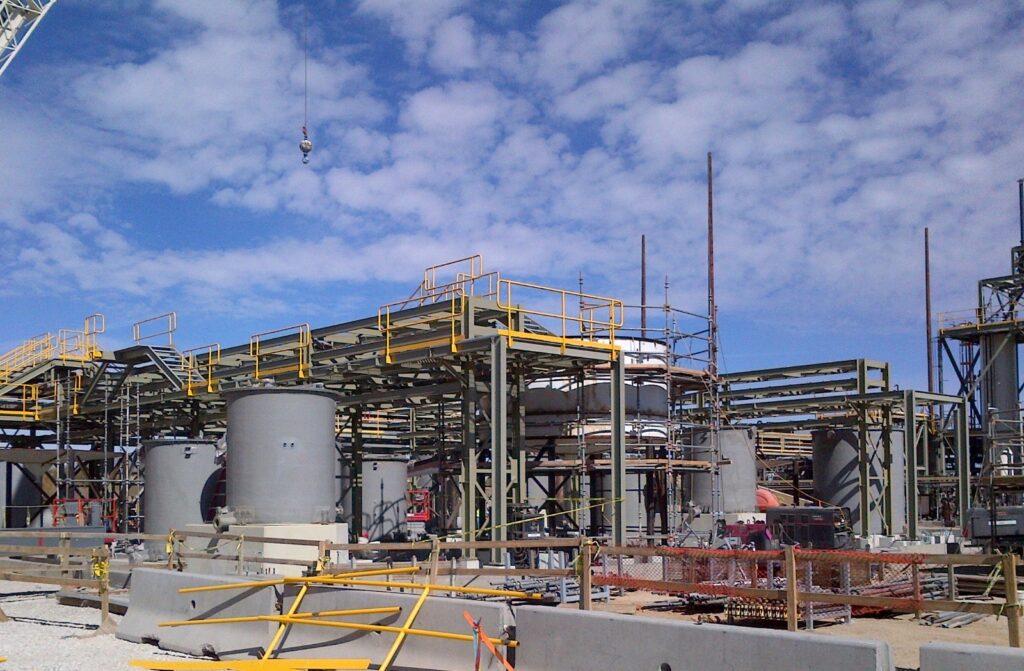
Across a mine’s water and process systems, FRP can support:
- Storage: process-water, chemical, neutralization, wastewater and emergency storage tanks
- Conveyance: piping for process liquids, chemical solutions, acidic media and suitable reclaim or slurry lines
- Treatment: mixing and neutralization tanks, scrubbers and absorption towers
- Reuse: tanks and piping in recycle-water circuits
- Emission control: ductwork, scrubbers, dampers and expansion joints for acid mist and corrosive off-gas
- Safe access: covers for thickeners, clarifiers and launders, plus grating and walkway components in wet, corrosive areas
FRP is not a stand-alone answer to climate risk. It belongs inside a broader program of hydrology and water-balance studies, drainage and containment design, monitoring, maintenance planning and emergency response.
How Crimar Industrial helps, problem by problem
Crimar Industrial supplies custom FRP equipment for mining and mineral processing, solvent extraction, smelting, off-gas treatment, and water and wastewater projects. The starting point is the operating problem, not a catalog.
When a mine needs more safe storage and emergency capacity. FRP tanks and process vessels for process water, chemicals, mixing, neutralization, pump tanks, solvent extraction service, wastewater and emergency storage, including large-diameter tanks fabricated on site when road limits rule out shop-built diameters.
When corrosive process liquids must move reliably. FRP piping with elbows, tees, flanges and fittings for process liquids, chemical solutions and acidic media. For slurry and reclaim lines, suitability depends on solids content, velocity, abrasion, pressure, temperature and chemistry, and is confirmed by engineering review, not assumed.
When acid mist or corrosive off-gas must be collected and treated. FRP ductwork, wet scrubbers, absorption towers and humidification towers, with FRP dampers and expansion joints for isolation, flow control and movement in duct and pipe runs.
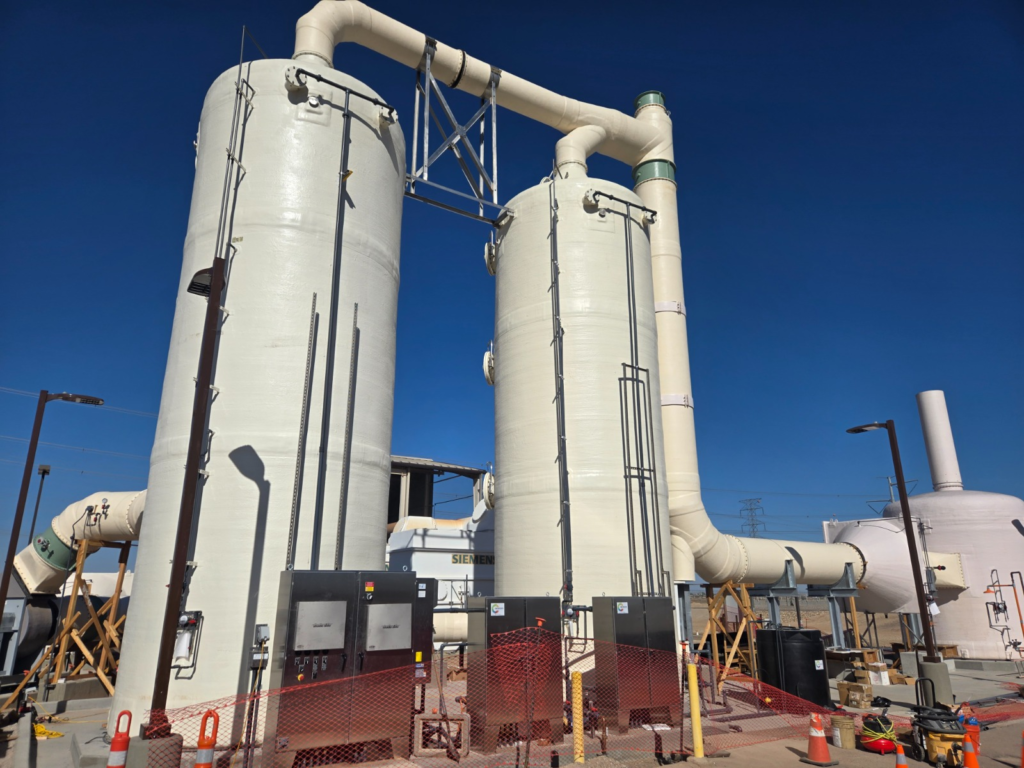
When metal equipment is failing from corrosion. Crimar Industrial reviews the existing duty, drawings and failure history, then proposes FRP replacements designed around the existing footprint and connections where practical.
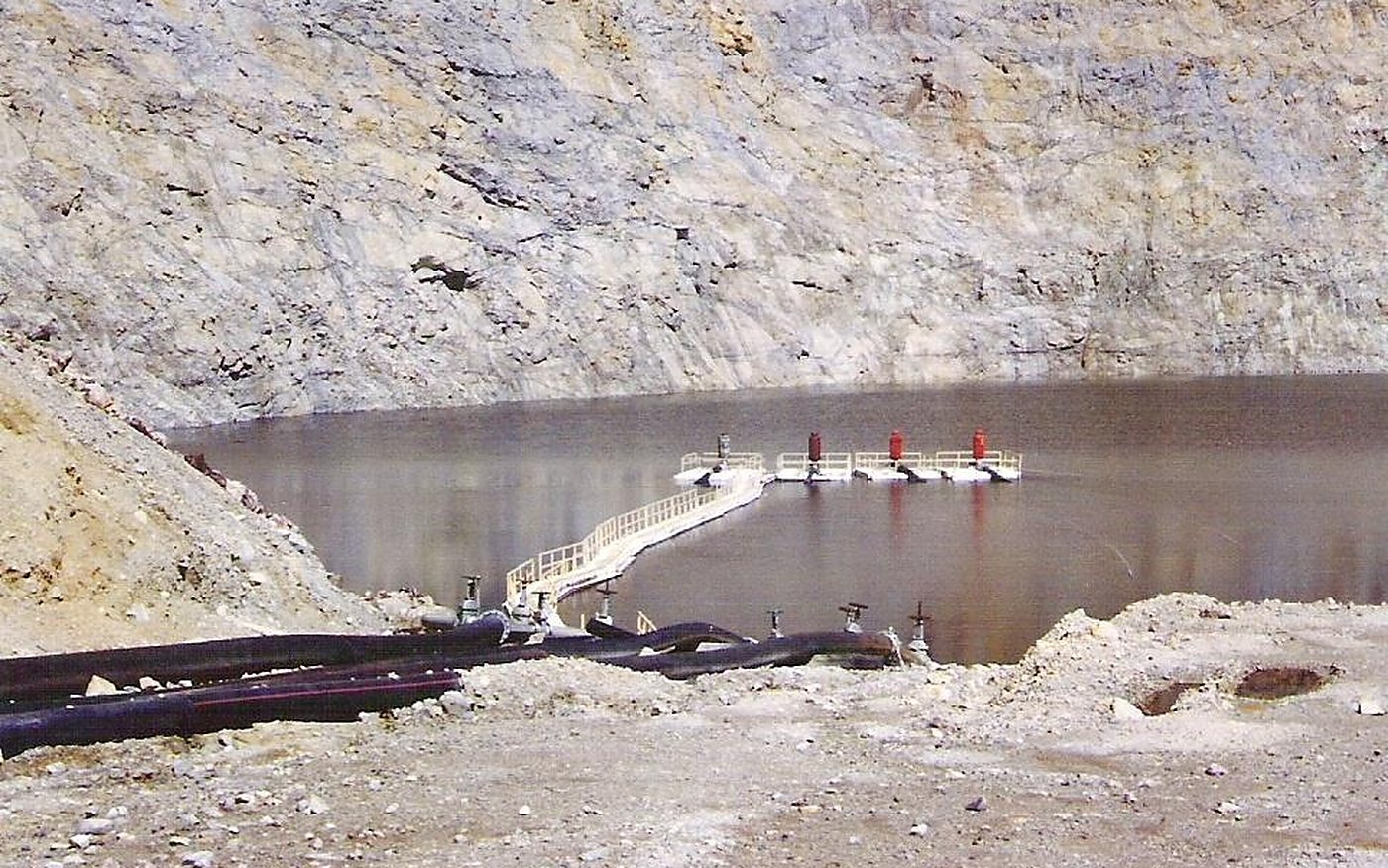
When wet process areas need non-metallic access and covers. FRP covers for thickeners, clarifiers, launders and trenches, plus grating and walkway components. For pond and reservoir pumping, Crimar Industrial has supplied FRP pump barges and floating walkways to mines since 1997.
When large equipment must fit transport and installation limits. Sectional designs, site fabrication or assembly, and shipping plans built around the route to site.
Behind each of these is the same discipline: equipment engineered for the specific medium, concentration, temperature, pressure or vacuum, abrasion, size and installation environment, with the resin system and laminate chosen for that chemistry rather than one resin applied to everything. Products can be engineered and supplied to applicable project specifications and recognized industry standards, as required.
Engineering questions to settle before specifying FRP
Every application should be evaluated against:
- Chemical composition and concentration
- Operating and upset temperature
- Pressure or vacuum
- Abrasion and solids content
- UV and outdoor exposure
- Mechanical loads
- Fire and electrical requirements
- Fabrication, transportation and installation constraints
- Applicable design code and inspection requirements
Clear answers at the inquiry stage shorten engineering review and reduce the risk of applying the wrong material or laminate to the duty.
Planning for the next weather extreme
Extreme weather cannot be eliminated. Mines can, however, reduce operating risk by planning ahead: understanding their site-specific exposure, monitoring water quantity and quality reliably, and investing in storage, conveyance, treatment and emission-control equipment that holds up in corrosive service when it is needed most.
If your mine, mineral-processing plant or water-treatment facility is reviewing its tanks, piping, scrubbers or other corrosion-resistant equipment, send Crimar Industrial your process conditions, drawings or equipment specifications. Our team can help evaluate an appropriate FRP solution for the application.
Reviewing tanks, piping or scrubbers for corrosive service?
Send your process conditions, drawings or specifications. A Crimar Industrial engineer will review the application and respond.
Sources: NOAA Climate Prediction Center, ENSO Diagnostic Discussion (8 October 2026); NOAA Climate Prediction Center, El Niño typical surface impacts; Xinhua via The Star, “Peru declares state of emergency in 796 districts over El Nino-linked rains” (3 July 2026); Reuters via Kitco, “Zambia seeks power imports for key mining sector” (23 April 2024).